Topical hair treatments in San Diego
The scalp is a skin problem as often as it is a hair problem, and the topical part of a hair loss plan usually does two jobs: treating the follicle, and treating the environment it sits in.
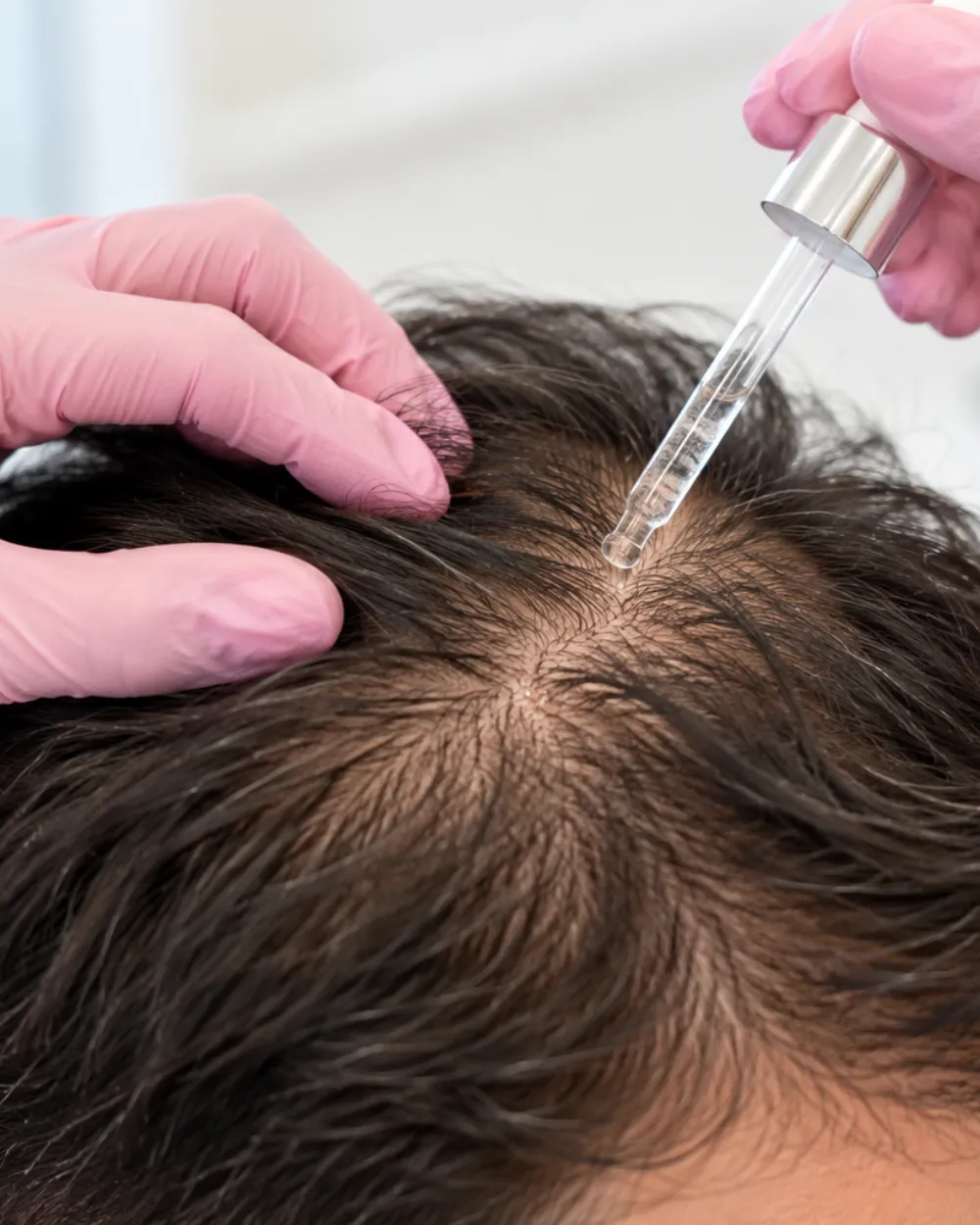
This page is about the second job and how it fits alongside the first. It is not a product list, and it deliberately does not promise regrowth from ingredients that have not shown it.
The two things topicals are used for
Medicated topicals act on the hair cycle itself. Minoxidil is the one with substantial evidence behind it, and it has its own page.
Supportive topicals treat the scalp. Seborrhoeic dermatitis, psoriasis and persistent inflammation all increase shedding and make any other treatment work less well, and they are common enough that they are worth looking for at every hair consultation. Treating them is not cosmetic — it removes a cause.
Ingredients, and what the evidence looks like
| Ingredient | Used for | Evidence |
|---|---|---|
Minoxidil | Pattern hair loss | Substantial. The best-supported topical treatment; see its own page. |
Ketoconazole shampoo | Seborrhoeic dermatitis, fungal scalp conditions | Good for the scalp condition. Limited and indirect for hair density. |
Salicylic acid, coal tar, zinc pyrithione | Scaling and flaking | Good for the scalp condition itself. Not a hair loss treatment. |
Caffeine, rosemary oil, peptide blends | Marketed for hair growth | Preliminary at best. Not a substitute for treatment with evidence behind it. |
What we will not tell you
That a cosmetic topical will reverse pattern hair loss. Nothing available over a counter does that, and a plan built on one costs the thing that actually matters here, which is time.
A great deal of money is spent in this category on products whose evidence is a single small study or none at all. If you are using something and it is not doing harm, there is rarely a reason to stop — but it should not be the plan.
Making a topical plan work
Applied to the scalp, not the hair — the follicle is what is being treated
Applied consistently. Almost every failure in this category is a compliance failure rather than a product failure
Photographs at the start, in consistent lighting, because hair changes too slowly to judge from memory
Reviewed at three and six months, and changed if there is a reason to change it rather than out of impatience
Questions about topical hair treatments
Do topical hair growth products actually work?
Minoxidil has substantial evidence for pattern hair loss. Medicated shampoos work well for the scalp conditions they treat, which indirectly helps shedding. Most cosmetic growth topicals — caffeine, rosemary oil, peptide blends — have preliminary evidence at best and are not a substitute for treatment that has been shown to work.
Can a scalp condition cause hair loss?
Yes. Seborrhoeic dermatitis, psoriasis and persistent scalp inflammation all increase shedding and make other treatments less effective. Treating the scalp condition removes a cause rather than masking one, which is why the scalp is examined at every hair consultation.
Does ketoconazole shampoo help hair loss?
It is effective for the fungal and inflammatory scalp conditions it is prescribed for, and improving those helps shedding indirectly. The evidence for a direct effect on hair density is limited.
How should topical treatments be applied?
To the scalp rather than to the hair, since the follicle is what is being treated, and consistently. Most failures in this category are missed applications rather than the wrong product.
How long before I know if a topical is working?
Three months at the earliest, six months for a fair assessment. Take photographs at the start in consistent lighting — hair changes too slowly to judge reliably from memory.
Related treatments
Last reviewed August 8, 2026
You are quoted before anything begins.
Tell us what you're considering and we'll tell you honestly whether topical hair treatments is the right treatment for it.